As a fan of Hindi literature, I have spent years searching for books that rise to the occasion and define the period – at least a decade or so. There are daunting classics that have become formalised because of their academic inclusions. However, some books remain outside the academic curriculum and yet impress readers across the spectrum. And then, there are novels that succeed because of their plot, novels that remain memorable because of their language. Also, there are works that become significant because they attempt to reshape the imaginative possibilities of a literary tradition. Elga Gorus by Kumar Pankaj belongs to the last category. Spread across two volumes, the novel is an ambitious attempt to revive the nearly forgotten tradition of large-scale tilism and mystery-driven fantasy in Hindi literature. Kumar Pankaj’s Elga Gorus emerges as a sincere and remarkably creative effort to fill the void created in large-scale imaginative fiction in Hindi literature. Yet, rather than merely imitating earlier traditions laid down by the master Devki Nandan in his epoch-making work Chandrakanta, the novel attempts to modernise the genre by combining mythology, psychological mystery, philosophical undertones, and cinematic storytelling into one expansive narrative universe.
The first striking aspect of the novel is its sheer ambition. Kumar Pankaj does not think in small literary frames. From the very beginning, the narrative announces its desire to create a complete mythological ecosystem rather than a simple fantasy adventure. The mysterious sacred book Elga Gorus, engraved upon thousands of square wax tablets using an ancient script, immediately establishes an atmosphere of secrecy and wonder. The mythology surrounding this sacred text forms the backbone of the narrative. Around it unfolds a world populated by strange races, ancient powers, mysterious creatures, hidden histories, dwarfs, giants, dark prophecies, and spiritual enigmas. The novel continuously expands outward, revealing one layer of mystery after another. This gradual expansion gives the reading experience an addictive quality because readers constantly feel that an even larger secret waits beyond the next revelation.
The two-volume structure of the novel proves essential to its storytelling method. Kumar Pankaj clearly understands that a world of this scale cannot be confined within a single compact narrative. The first volume primarily functions as an immersion into the strange universe of Elga Gorus, introducing its atmosphere, symbolic structures, dangerous quests, and bizarre inhabitants. The second volume broadens the scope further and deepens the emotional and philosophical implications of the narrative. Rather than treating the second part as a mere continuation, the author uses it to intensify the mythology and enlarge the emotional stakes. This structural expansion gives the story the feel of an epic oral tradition where mysteries unfold gradually across generations and journeys rather than through hurried revelations. Readers willing to invest themselves fully into both volumes are rewarded with a richly layered literary experience.
At the centre of the story remains an adventure carrying the characters across forests, caves, deserts, secret settlements, and terrifying battlefields populated by mysterious beings. Their quest for the sacred book becomes both physical and metaphysical in nature. Kumar Pankaj writes journeys exceptionally well. The movement through landscapes never feels mechanical or repetitive because each location possesses its own atmosphere, symbolic significance, and narrative energy. Some passages evoke awe, some fear, while others generate a haunting sense of loneliness and cosmic mystery. The author demonstrates an impressive visual imagination throughout the novel. Several scenes possess a cinematic grandeur that naturally invites visualisation. One can easily imagine many sequences translated into graphic novels, animation, or epic fantasy cinema because of the intensity and clarity of the imagery.
Another important achievement of the novel lies in its characters. Fantasy literature often struggles with characterisation because writers become overly absorbed in world-building and mythology. Kumar Pankaj, however, succeeds in creating memorable personalities who leave emotional impressions beyond their fantastical appearances. The novel contains an enormous range of characters, many of them unusual, mysterious, or symbolically charged. Some are terrifying, some strangely compassionate, and some deeply enigmatic. The most impressive aspect is that the author rarely reduces characters to simplistic moral categories. Even within the fantastical framework, many figures carry emotional contradictions and psychological complexity. Certain characters appear briefly yet remain memorable because of the specificity with which they are written. The dwarfs, ancient beings, warriors, spiritual figures, and shadowy entities all contribute to making the world feel inhabited rather than artificially constructed.
Kumar Pankaj’s language deserves substantial appreciation because it forms one of the novel’s defining artistic strengths. The prose moves confidently between lyrical beauty and narrative urgency. The author experiments with vocabulary fearlessly and introduces numerous fresh words and expressions into the text. Instead of relying upon conventional fantasy language borrowed from Western traditions, he creates an indigenous linguistic texture suited to the strange mythology of his fictional universe. Many metaphors and similes feel startlingly original. The descriptions of landscapes, mysterious creatures, and supernatural phenomena often possess poetic intensity. At times, the prose even begins to resemble a mythic chant or oral storytelling performance. This stylistic richness enhances the atmosphere significantly. The language itself becomes part of the enchantment.
One of the most compelling aspects of Elga Gorus is its refusal to remain superficial entertainment. Beneath the mysterious adventures and fantastical conflicts lies a deeper philosophical current. The novel repeatedly reflects upon knowledge, mortality, fear, corruption, transformation, and the dangerous attraction of hidden power. The sacred book itself functions symbolically as forbidden knowledge preserved through secrecy and sacrifice. Many characters seem trapped between spiritual aspiration and destructive temptation. This philosophical dimension prevents the novel from becoming merely a plot-driven spectacle. Readers interested in symbolic and reflective literature will discover multiple interpretive layers hidden beneath the adventurous surface narrative.
At the same time, it is important to acknowledge that the very qualities that make Elga Gorus ambitious may also become challenging for certain readers. The novel’s scale is immense, and the large number of characters, unfamiliar terminology, mythological references, and interconnected narrative threads demand concentration and patience. Readers accustomed to fast-paced linear storytelling may occasionally feel overwhelmed by the density of the fictional world. The two-volume structure, while artistically justified, also requires sustained commitment. Some sections linger deliberately upon atmosphere, description, and mystery-building rather than immediate action. Additionally, because the author introduces numerous unusual creatures, symbolic concepts, and invented expressions, readers may initially struggle to retain every detail or fully map the relationships between characters and events. However, these limitations emerge less from weakness and more from the novel’s extraordinary ambition. Elga Gorus is not designed for hurried consumption. It asks readers to surrender themselves completely to its imaginative logic.
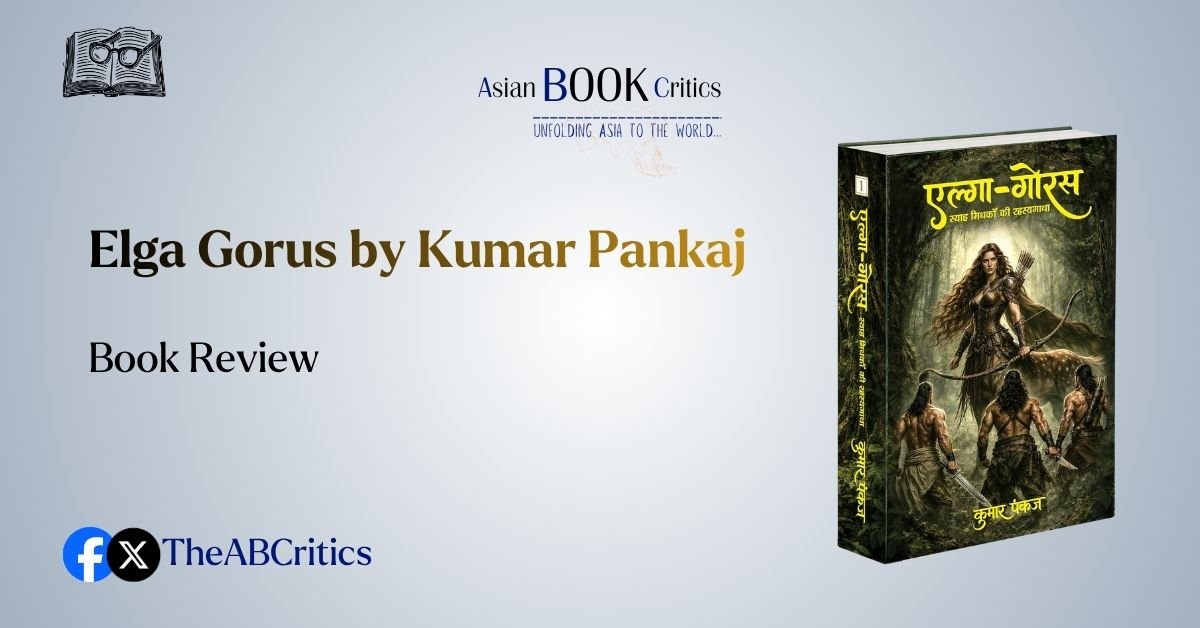
The production quality of the book further enhances its impact. The visual presentation, cover design, typography, and overall aesthetic construction reflect unusual care and artistic seriousness. In an era where many books are produced with minimal attention to physical beauty, Elga Gorus stands apart as a visually immersive object. The grandeur of the design complements the mythological scale of the narrative itself. Holding the book already creates anticipation before the reading even begins. This fusion of literary imagination and aesthetic presentation significantly strengthens the overall experience.
From a broader literary perspective, Elga Gorus is important because it demonstrates that Hindi literature still possesses immense unexplored potential in the domain of speculative fiction, dark mythology, and epic fantasy. Kumar Pankaj does not merely write a story; he constructs a mythology capable of further expansion. The novel revives indigenous traditions of tilism and mystery while simultaneously incorporating modern narrative complexity and psychological depth. This balance between tradition and innovation gives the work its distinctive identity.
Ultimately, Elga Gorus succeeds because of its sincerity of imagination. Kumar Pankaj writes with the conviction of a storyteller fully immersed in the world he has created. The novel’s strange creatures, hidden conspiracies, sacred texts, mysterious landscapes, and unforgettable characters collectively generate a reading experience that feels rare within contemporary Hindi literature. Even when the narrative becomes dense or overwhelming, the creative force behind it remains undeniable. Few writers today possess the courage to dream on such a vast imaginative scale. Fewer still manage to sustain that dream across two substantial volumes with such consistency and atmospheric power. Elga Gorus may not be an effortless read, but it is undoubtedly a rewarding one for readers willing to enter its dark, mysterious, and deeply imaginative universe.
You can get the book from Amazon India – click here to get it now.
Review by Nishant for Asian Book Critics